
Notice: Developing Compassion That Sees People
Notice: Developing Compassion That Sees People
Have you ever been so busy that you completely missed what someone near you was carrying? Most of us are very aware of our own needs. We know when we are tired, stressed, discouraged, overwhelmed, or frustrated. We notice when our schedule is too full, when our patience is running low, and when life feels heavy.
But Jesus teaches us to develop a different kind of awareness. In the parable of the Good Samaritan in Luke 10:25-37, the Samaritan did three simple but powerful things: he noticed, he stopped, and he served.
Before he could help the wounded man, he first had to see him. That sounds simple, but it may be one of the greatest challenges of living a life of compassion.
Compassion Begins With Seeing
Luke 10:33 says that when the Samaritan saw the wounded man, “he had compassion.” The priest saw him. The Levite saw him. The Samaritan saw him too. The difference was what happened inside him after he noticed.
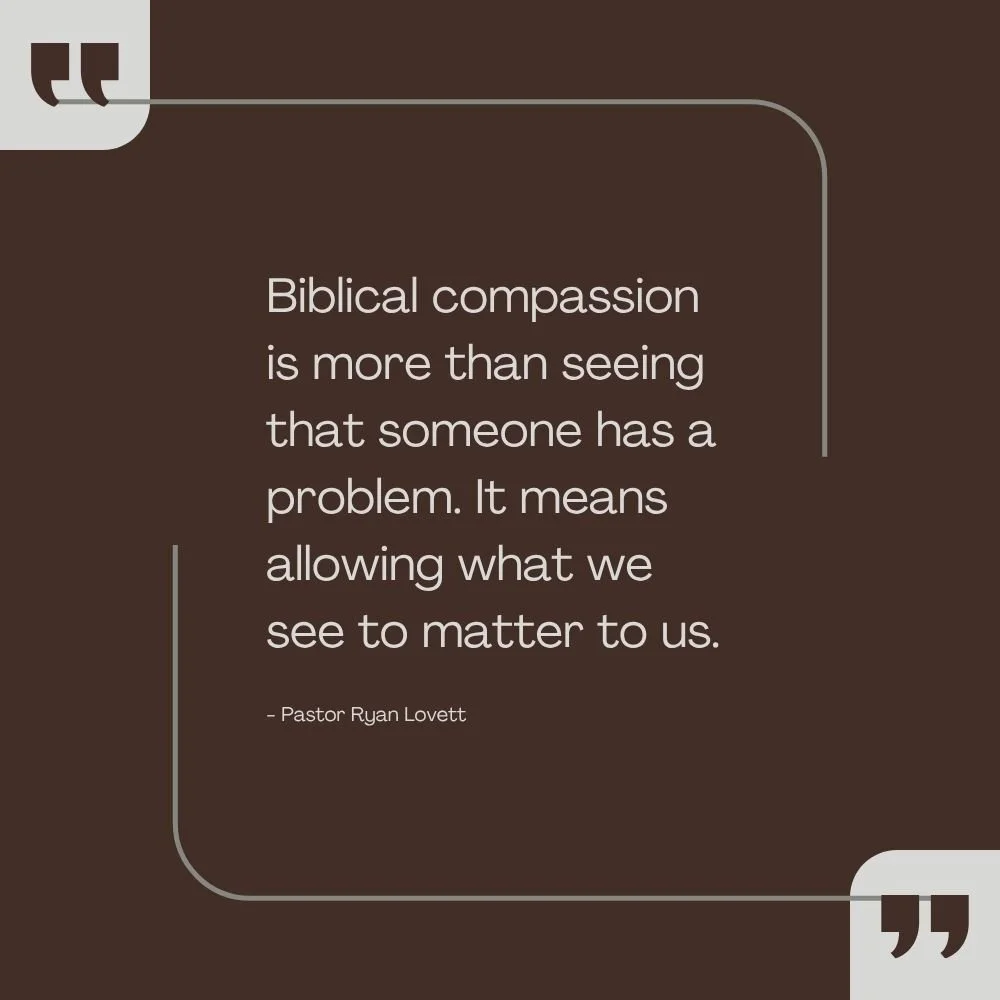
Biblical compassion is more than seeing that someone has a problem. It means allowing what we see to matter to us. Many people are not intentionally uncaring. They are simply consumed with their own responsibilities. Work, bills, children, schedules, notifications, pressure, and exhaustion can narrow our attention until we become unaware of the people directly in front of us.
Love requires attention, and busyness often steals it. Developing compassion begins when we intentionally look beyond ourselves.
Learn to Notice What Is Beneath the Surface
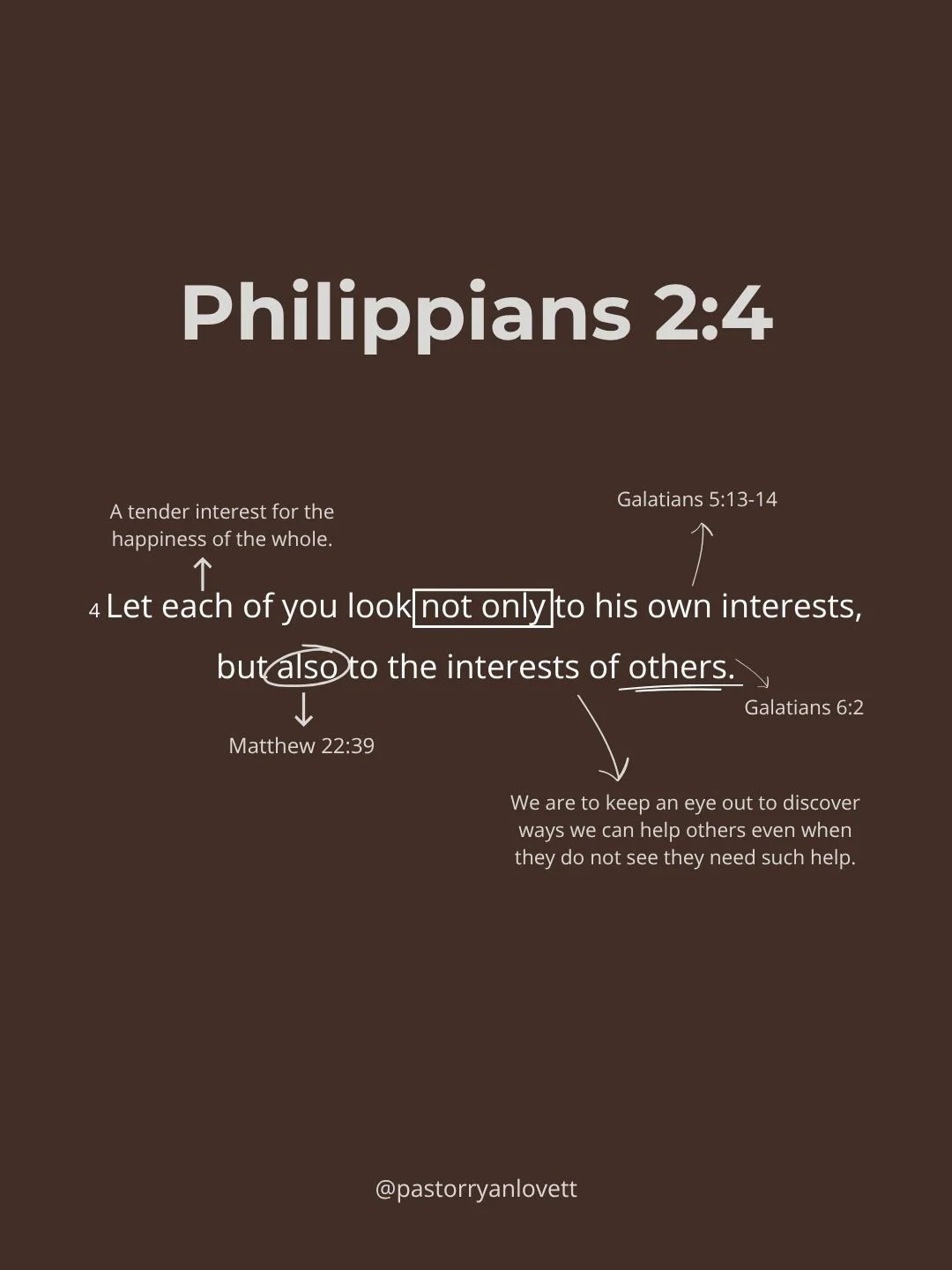
Let each of you look not only to his own interests, but also to the interests of others. - Philippians 2:4
That requires more than recognizing obvious emergencies.Sometimes noticing means realizing your spouse has become unusually quiet. It means recognizing that your child is acting differently instead of immediately correcting the behavior. It means hearing something beneath the words when a friend says, “I’m fine.” It means seeing the coworker who seems overwhelmed or the person at church who has slowly withdrawn.
Compassion asks, “What might this person be carrying?” That question begins shifting our attention from self-first living toward the kind of love Jesus commands.
Slow Your Heart Enough to See
We cannot serve burdens we never notice. That is why awareness is the first step. You do not necessarily need a less demanding life before you can become more compassionate. You may simply need to become more attentive within the life you already have.
Look people in the eyes. Ask another question. Listen to the answer. Pay attention to changes in someone’s mood or behavior. Notice the people in your own home before looking for opportunities somewhere else.
The Good Samaritan’s compassion began with a willingness to truly see the person in front of him. And that brings us back to the question we started with.
How do we stop missing the people around us?
We develop compassion. Compassion trains us to see another person’s burden as worthy of our attention. Once we truly notice, something begins to change. Awareness creates the opportunity for love to move from intention toward action.
And that leads to the next step (coming soon).